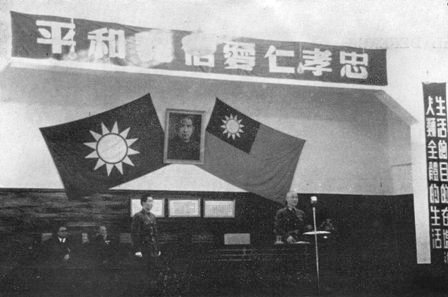
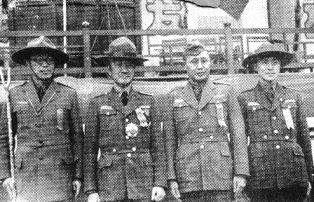
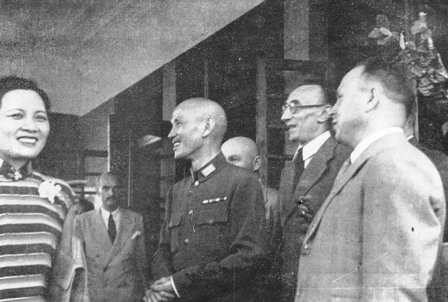
 Honorary Scout Masters. Center left Tai Chi-Tao, President of the Examination Yuan; Center right
Ho Ying-chin, Chief of Staff and Minister of War; Extreme right Chen Li-fu, Minister of Education.
Honorary Scout Masters. Center left Tai Chi-Tao, President of the Examination Yuan; Center right
Ho Ying-chin, Chief of Staff and Minister of War; Extreme right Chen Li-fu, Minister of Education.
|
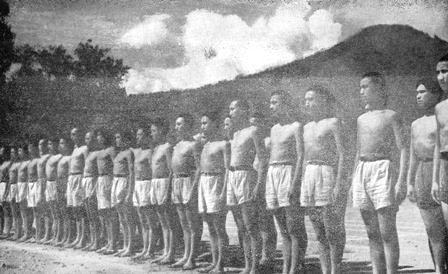
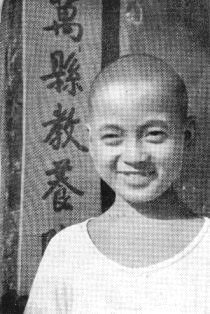
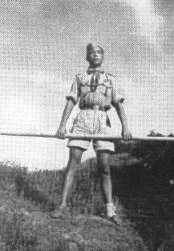 A Chinese Boy Scout
|
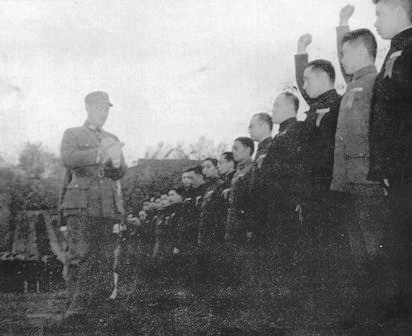
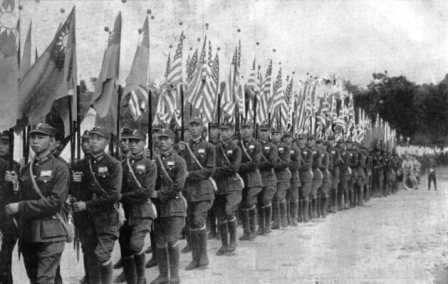
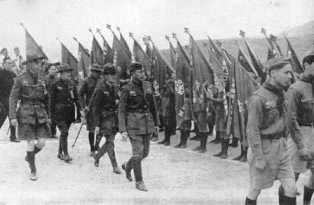 General Ho Ying-chin, Minister of War, inspecting Chinese Boy Scouts.
|
|
|
Dee-dee and Mei-mei (Brother and Sister)
|
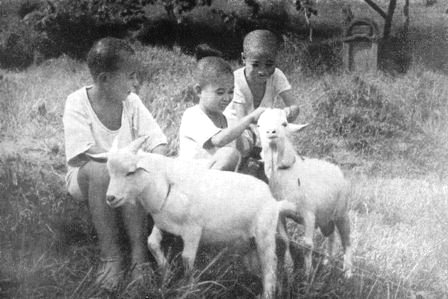 Some "Warphans" with their sources of milk.
|
|
|
Made homeless by the war, thousands of children have found refuge in Madame Chiang's "Warphanages."
Under the direction of Madame Chiang, the National Refugee Children Association, founded
in Hankow in 1938, now runs 37 orphanages besides 12 branches in various Provinces of Free China.
|
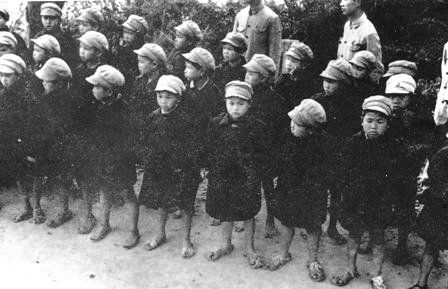 Gathered from various war areas these Warphans are not merely given food and clothing but are being trained to
become useful citizens.
Gathered from various war areas these Warphans are not merely given food and clothing but are being trained to
become useful citizens.
|
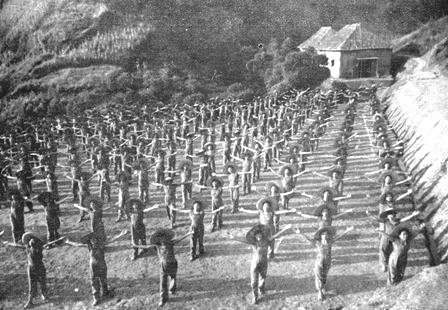
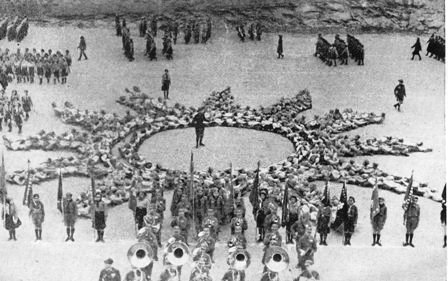 A Boy Scout rally in Chungking
|
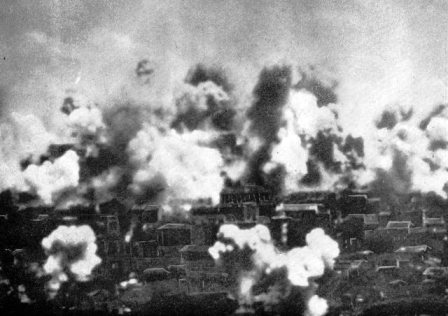
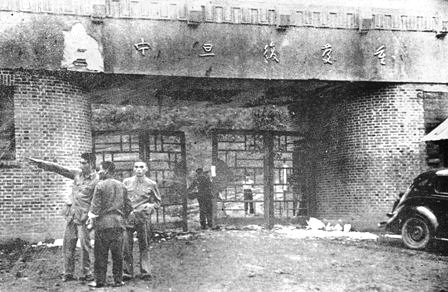 Fuhtan Middle School, Chungking, after an enemy raid.
|
Students collecting what was left after Japanese bombings.
|
|
In six years of war no less than 91 out of the 108 Colleges and Universities in China have been either occupied or
damaged by the enemy. Total losses sustained up to the end of 1939 alone amounted to more than $90,000,000 in Chinese
currency. But China's traditional love for learning can never be destroyed by bombs or gun-fire. Tens of thousands of
teachers and students have moved into the Far West to make a new start. Many of these young men and women have
virtually walked hundreds of miles to get freedom of education.
|
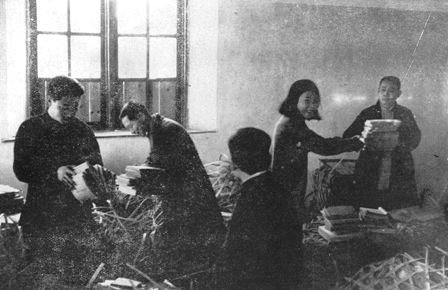 Chinese students unpacking books donated by American friends.
|
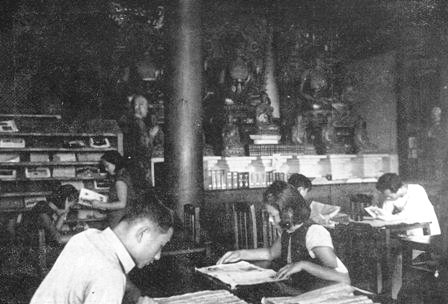 A Chinese temple converted into a college library.
|
|
|
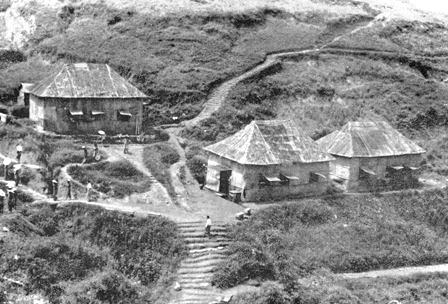
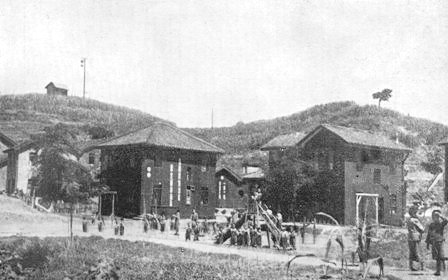
Some typical schools in wartime China, not a few of which were erected in haste.
|
THE PEOPLE'S WAR
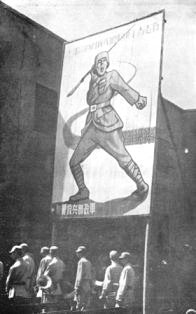 Come, let us defend our sacred soil!
|
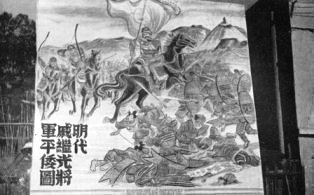 Poster showing Chi Chi-kwang, famous general of Ming Dynasty (A.D. 1368-1644) resisting Japanese invaders in
East China.
Poster showing Chi Chi-kwang, famous general of Ming Dynasty (A.D. 1368-1644) resisting Japanese invaders in
East China.
|
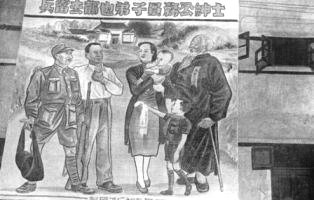 The rich and the poor, the highest official and the humblest public servant - all must contribute man-power
for national defence.
The rich and the poor, the highest official and the humblest public servant - all must contribute man-power
for national defence.
|
|
 Collecting funds for Army Cultural Service campaign.
|
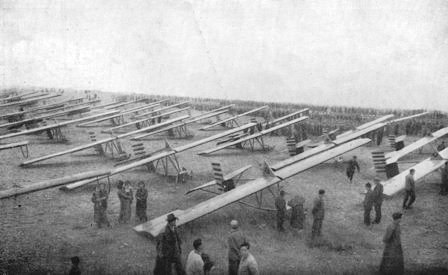 The people's gift: 100 gliders to make the nation more aviation-minded.
|
|
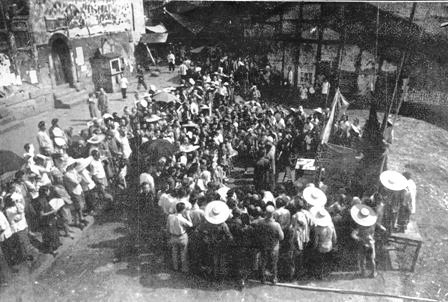 Street corner performance as medium of war propaganda.
|
 An orchestral concert in Chungking
|
|
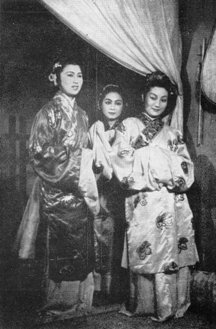 In wartime China, classical drama still draws huge crowds.
|
 The spirit of armed resistance permeates not only among the grown-ups but also among the children.
At play youngsters show their war-mindedness and learn to make war toys.
The spirit of armed resistance permeates not only among the grown-ups but also among the children.
At play youngsters show their war-mindedness and learn to make war toys.
|
|
 Dr. T. V. Soong, Minister of Foreign Affairs,
at a press conference in Chungking.
|
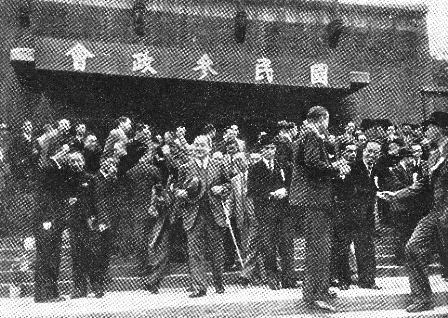 Opening session of People's Political Council
- a wartime experiment in democracy.
|
|
A NEW WOMANHOOD
Though the war has brought much suffering to Chinese women in the wake of Japanese occupation of many cities, they
have won more glory than one realizes. They nurse the wounded and mother the "warphans." Braving shot and shell, they
go to the front to bring cheer to the fighting men or remain in war zones to bring army and people together. They
go behind the Japanese lines to strengthen Chinese administration. They assume gendarmerie duty during emergency.
Away from the din of war, they train women in small industries to produce more for the country. When a new road is
built, Chinese women, shoulder to shoulder with men, take up picks and spades. They work on high cliffs in cold winds
and on low-lying marsh land in the scorching sun.
Standing at the frontier of all women's activities is Madame Chiang Kai-shek, China's First Lady. She has labored for
the women and children of China, especially for the poor and uneducated in the rural districts. A multitude of good
causes have been benefited by her sympathy and practical interest, and her eagerness to get things done. Her
indomitable courage and leadership in the crisis of her native land has been internationally recognized. She is a
woman who has given exceptional service to establish peace among nations, for the welfare of children, the advancement
of women, and the spirit of humanity.
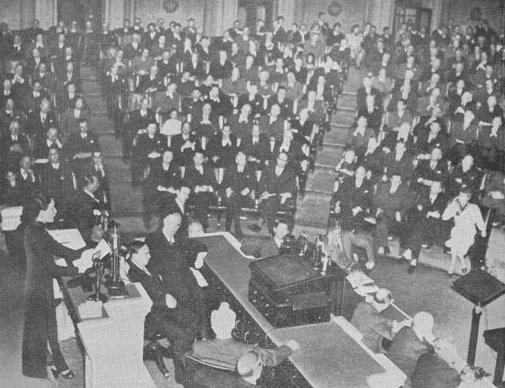
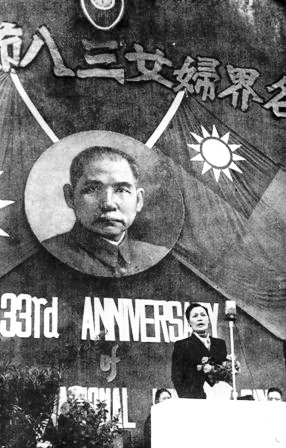 Madame Chiang Kai-shek in mass meeting on International Women's Day in Chungking
|
|
 Madame Sun Yat-sen distributing gifts to wounded soldiers
|
 Madame Chiang Kai-shek comforting bomb-shaken children after an air raid
|
|
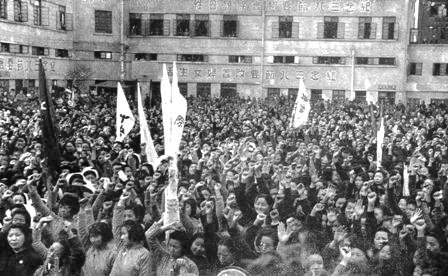 Mass meeting held on International Women's Day in Chungking
|
 Madame Ma Chao-chun presenting wounded men with towels and articles for daily use
|
|
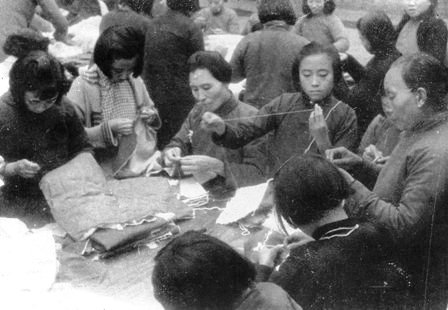 Chinese women, young and old, knitting for the country's defenders.
|
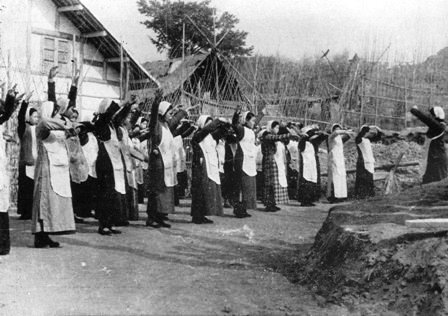 Chinese factory girls having morning exercises.
|
|
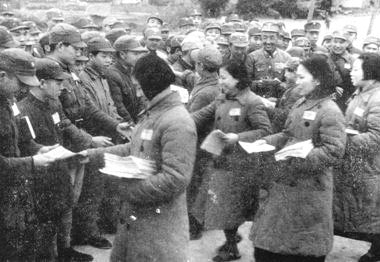 Chinese women workers teach men at the front how to sing.
|
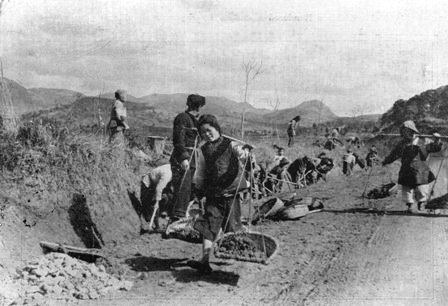 Women workers help build highways.
|
|
 A trained nurse attending one of China's 30,000 war orphans.
|
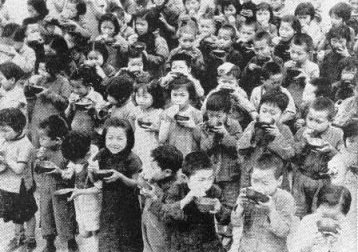 A porridge canteen gives happiness,br> to many a hungry child.
|
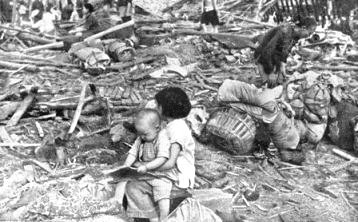 Children rendered homeless by Japanese bombings.
|
|
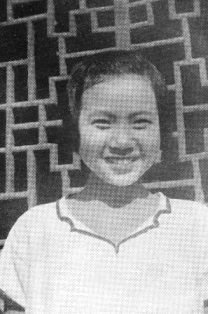
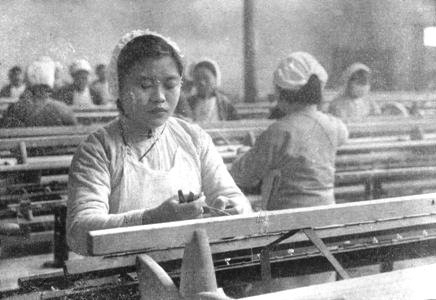 A typical Chinese factory girl
|
 Raising silkworms
|
|
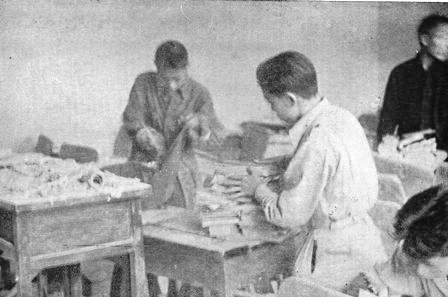
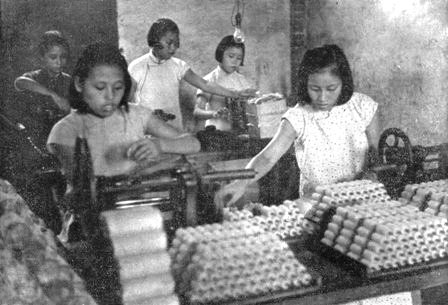 Chinese factory girls help increase war production
|
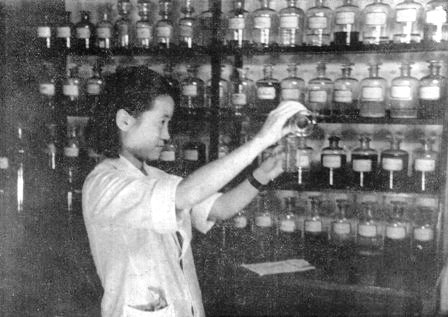 A Chinese woman pharmaceutist
|
|
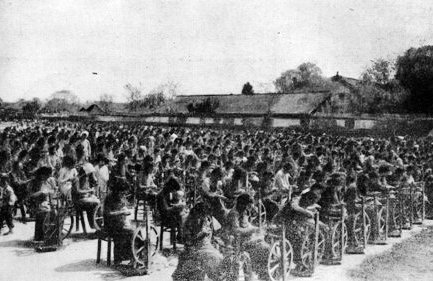 Collective spinning in a Chinese industrial co-operative
|
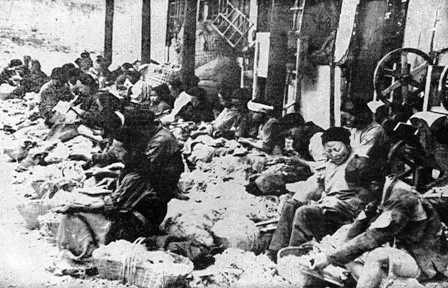 Women refugees combing wool for blanket producing co-operative
|
|
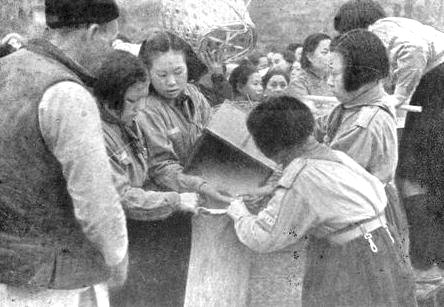 Girl Guides soliciting relief funds for wounded soldiers
|
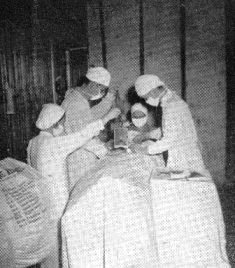 Chinese doctors and nurses operate with use of oil lamps
|
|
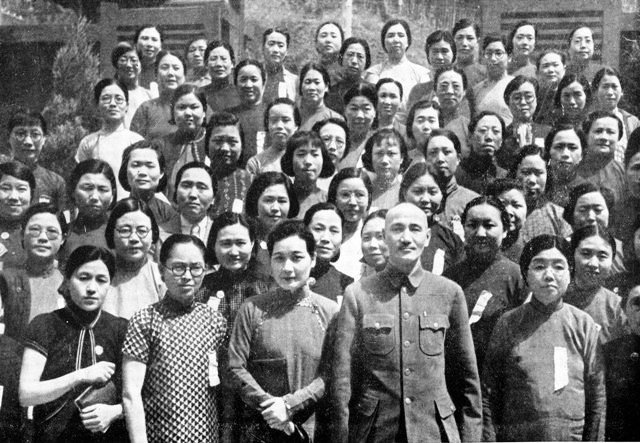
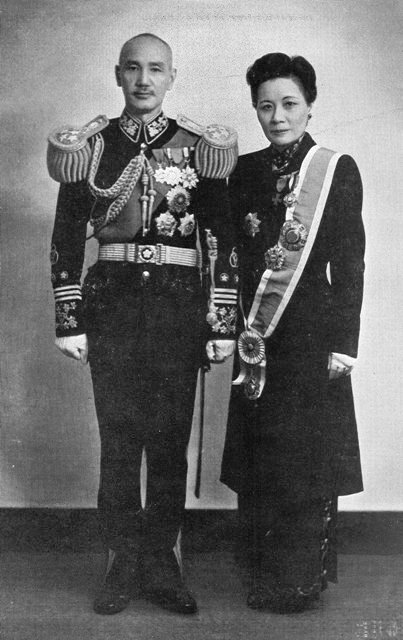
Generalissimo and Madame Chiang Kai-shek pose with delegates responsible
for the promotion of women's wartime
work in various parts of the country
|
 This is not a war between two armies; It is organized vandalism against an innocent people. By having started
such a fight against the entire Chinese people, Japan has committed the greatest crime and blunder in her history.
This is not a war between two armies; It is organized vandalism against an innocent people. By having started
such a fight against the entire Chinese people, Japan has committed the greatest crime and blunder in her history.
|
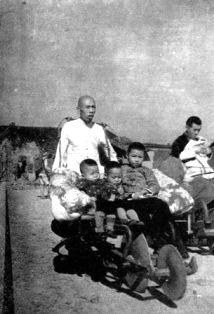 Once a peaceful and prosperous village, this is now made uninhabitable by Japanese vandalism. Some of China's
50,000,000 refugees made homeless by Japan's "Divine Mission in East Asia."
Once a peaceful and prosperous village, this is now made uninhabitable by Japanese vandalism. Some of China's
50,000,000 refugees made homeless by Japan's "Divine Mission in East Asia."
|
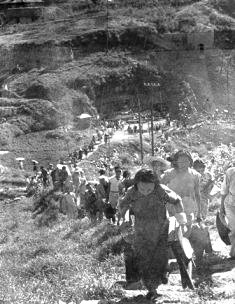 Chungking populace emerging from air raid shelters during "Bombing Season"
|
CHUNGKING'S BAPTISM OF FIRE !
A NEW ECONOMIC BASE
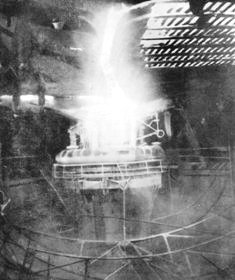 A 500-ton iron ore smelting plant
|
 Factories like this have been built in many parts of West China
to speed up production for the Army and the
people
|
|
WARTIME INDUSTRY
War is to be won in the rear as well as on the battlefields. Behind the fighting lines economic and industrial
reconstruction goes on at high speed. The people have been encouraged to invest in productive enterprises. Government
capital has been used to establish important industrial and mining enterprises and to assist private concerns to move
from war areas to the interior. A new industrial base is being built up to meet both the exigencies
of the movement and the postwar demands. Prior to the outbreak of hostilities in 1937, there were only 745 local coal
mines and 33 iron mines operating with native methods on a small scale in the hinterland. There was no cement factory,
alcohol distillery or oil refinery. Szechwan had only 33 factories.
Today, there are 1,350 private-owned industrial plants in the interior using mechanical power, about 600 of these
factories having been moved inland with Government assistance. In addition, there are 108 units of heavy industries
under Government control. In many ways, Free China can be self-sufficient. The chief lack is the supply of steel, but
efforts are being made to increase the power and heavy machinery for the production of steel.
Large-scale textile and light chemical industries were not started in West China until after the war broke out.
Before 1938 only 40,000 spindles were found in the northwestern and southwestern provinces. Now the number has increased
to 230,000 spindles in Free China, producing 100,000 bales of yarn a year.
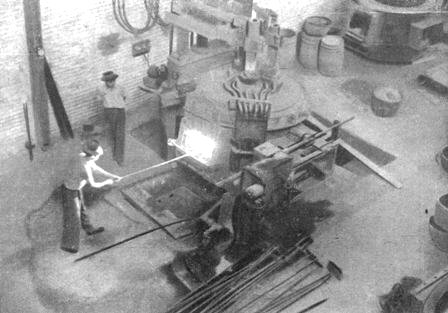
 Day and night they keep the hammer going
|
 Inside a steel factory in West China
|
|
|
"In the southwest and northwest we are rapidly introducing national defence industries and light industries, and are
developing our mineral and lumber resources. We are mobilizing the nation's technical skill and capital, and are
laying a sound and permanent foundation for our national economic life." - Generalissimo Chiang Kai-shek
|
 Where electricity is unobtainable production is carried on by human power
|
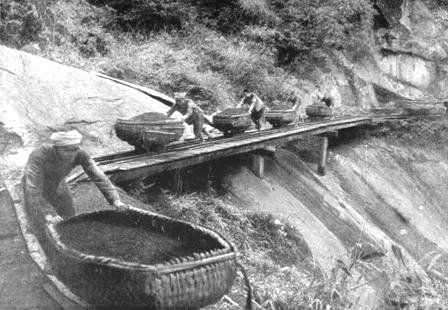 Pushing baskets of coal along a temporary track to a nearby jetty
|
|
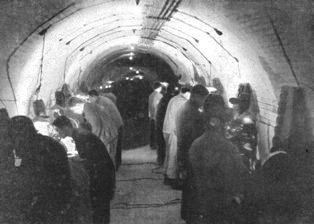 A bomb-proof workshop somewhere in West China
|
 A modern cotton spinning mill in Free China
|
|
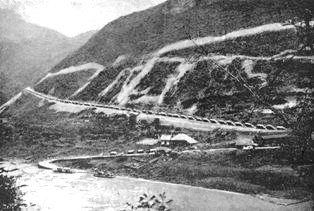 A motor caravan carrying vital war materials along the Yunnan-Burma Highway
|
 Red Cross vehicles transporting medical supplies to the war fronts
|
|
 Camels bringing much-treasured gasoline into China
|
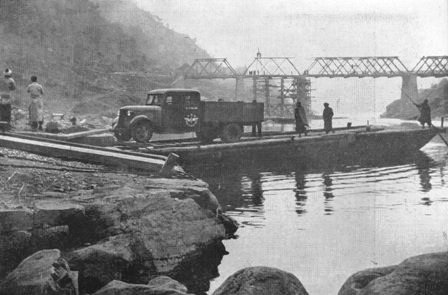 A truck being ferried across a river in southwest China
|
|
 height=300> height=300>
|
 height=300> height=300>
|
Chinese mechanics work hard and find their own amusements
|
 height=300>
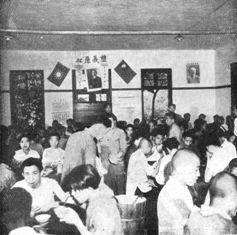
A Mess Hall for workers height=300>
A Mess Hall for workers
|
CHINA'S FIGHTING STRENGTH
War is fought with metal, money, and man. Not infrequently mainly with Man only. In this regard, China is in an
advantageous position. She has a vast supply of man-power. In the first six years of war, her most important weapon
has been Man, and Man is still her main asset in her armed struggle against Japan.
The average Chinese is intelligent and follows instructions readily. He is resourceful and commands extraordinary
ingenuity. He is traditionally loyal and faithful to the point of death to a leader who treats him with consideration.
He is honest and knows no fear. He is inured to privation and physical hardships, and meets death with the same philosophical
calm with which he faces life. He makes an excellent soldier, provided he is well-trained and led.
Since the outbreak of the war the Chinese Army has been greatly increased both in size and in fighting power. From a
total of less than 200 comparatively poorly equipped and ill-trained divisions, it has grown to well over 300 divisions
with 5,000,000 men in the field and 15,000,000 men in reserve units or in training camps. Over 800,000 guerillas
are harassing Japanese garrisons and lines of communication, while more than 600,000 regular troops are operating
behind the Japanese lines. In addition, 50,000,000 able-bodied men of military age are available for service. This
against Japan's total of 10,000,000 able-bodied males, including Koreans and Formosans whom they are pressing into
service, is a clear indication of Chinese superiority in man-power.
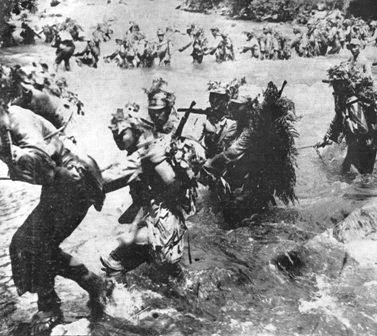 Camouflaged Chinese soldiers advancing toward Yunnan-Burma border
|
 Chinese troops fighting along the Salween River front
|
|
A TRIBUTE TO THE CHINESE SOLDIER
"Five years ago today I went to Wangpinghsien to find out what was going on in a clash reported there between Chinese
and Japanese troops. I found that the Japanese were attacking the town and that much to their surprise the Chinese
were putting up a stubborn resistance. The defence of Lukouchiao proved to be prophetic and symbolic. The Chinese
defence has stood up and now it is a privilege to be here and to pay tribute to the man who has carried the burden
and gone through the test of battle - the Chinese soldier.
"To me the Chinese soldier best exemplifies the greatness of the Chinese people, their indomitable spirit, their
uncomplaining loyalty, their honesty of purpose, their steadfast perseverance. He endures untold privations without
a whimper. He follows wherever he is led without question or hesitation and it never occurs to his simple and
straightforward mind that he is doing anything heroic. He asks for little and always stands ready to give all. I
feel it is a great honor as a representative of the United States to salute you today - the Chinese soldier." -
Lieutenant General Joseph W. Stilwell, Commander of the U.S. Army in China, Burma and India, July 7, 1942.
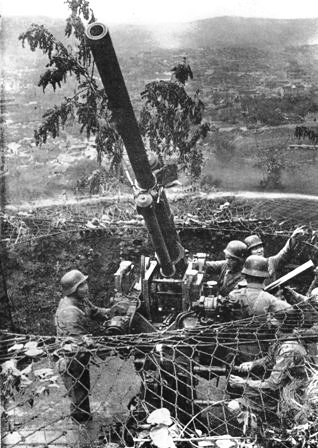 An anti-aircraft unit near Chungking
|
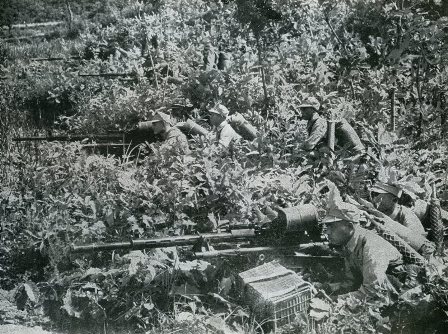
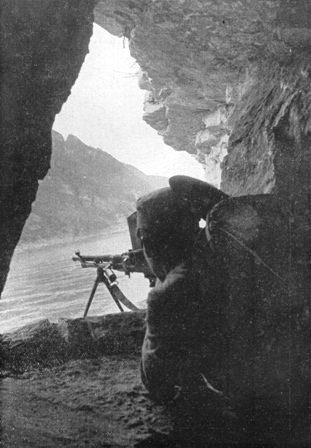 A Chinese machine-gunner guarding the Yangtze Gorges
|
|
|
|
It is the hope of most of China's energetic youths to be enlisted in the Aviation and Military Academies but only
a few can pass the rigid examinations. Everyone in China's young but hopeful air force does his part in the defence
of the nation.
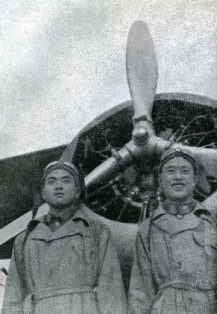 The young Chinese Air Force
|
 Chinese airmen receiving instructions before take-off
|
|
 A practice formation flight
|
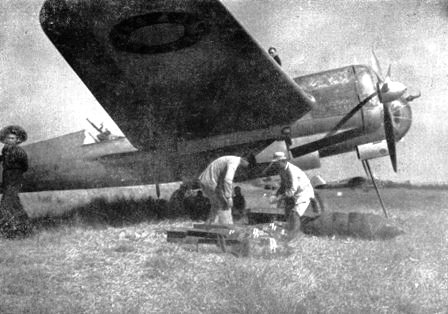 Loading bombs for an attack on Japanese bases
|
|
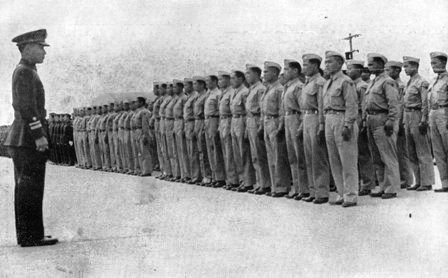 Young Chinese airmen in training in U.S.A.
|
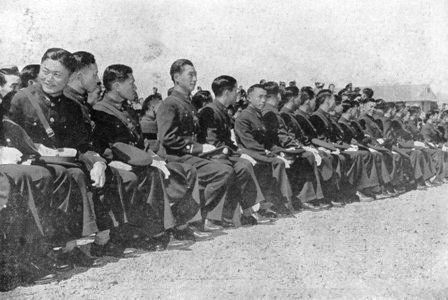 Some Chinese graduates from an American aviation school
|
|
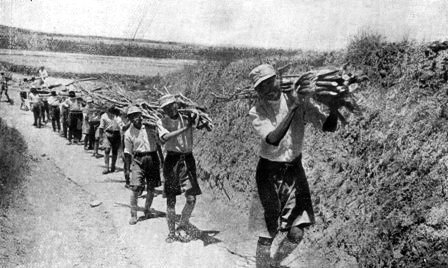 In their spare time Chinese soldiers gather fuel and do all sorts of work to save money for the country
|
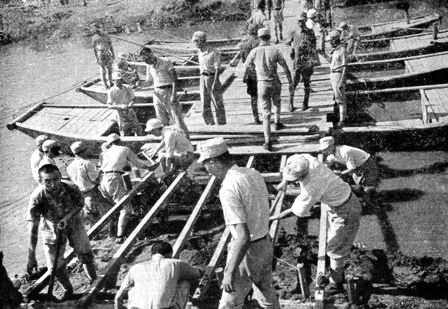 Chinese troops erecting a temporary bridge
|
|
 Soldiers help finish a strategic railway
|
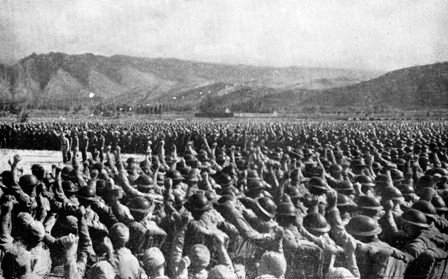 Chinese troops assembled together before leaving for the war front
|
|
 Generalissimo Chiang Kai-shek reviewing British and Indian troops during his historic visit in New Delhi
|
 Generalissimo's visit to the Northwest Frontier in India
|
|
"The relations of India with our great ally, the Republic of China, have been drawn closer than ever before in history.
The mutual esteem and knowledge won during the visit of Generalissimo and Madame Chiang Kai-shek in February, 1942,
has broadened to an understanding which bodes well for the future relations of the two countries." - Lord Linlithgow.
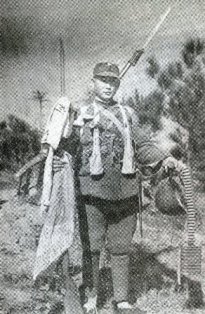 A Chinese soldier shows his trophies
|
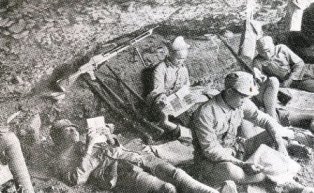 Chinese soldiers enjoying a rest period on the Yangtze front
|
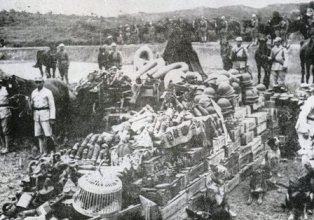 "Presents" from the Imperial Japanese Army
|
|
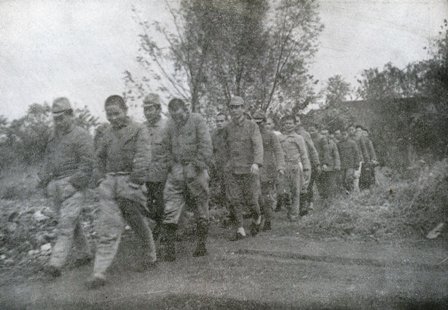 Japanese war prisoners marched off to a Chinese field headquarters
|
 Japanese war prisoners given a rest and cigarettes
|
|
 General Hsuch Yuch, veteran commander of the Changsha front.
|
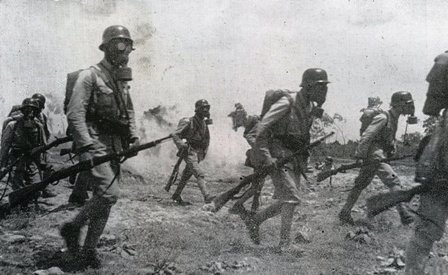 China's New Army going through anti-gas drill
|
|
 Rain or shine, he stays on his job.
|
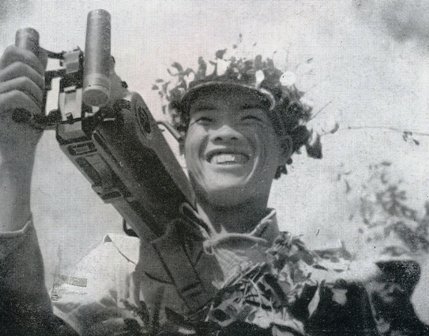 A Chinese fighter never fails to give you a smile
|
|

GENERALISSIMO CHIANG KAI-SHEK EXAMINING A COPY OF HIS OWN BOOK CHINA'S DESTINY
|
The destiny of China rests upon the shoulders of our entire people, and is to be decided today while this war is
going on. This is no time for indecision and vacillation, much less for blind following of and dependence on others
. . . . . . In the past China's destiny depended on diplomacy; in the future China's destiny will depend on internal
administration. That is to say, it will be decided by the people themselves."
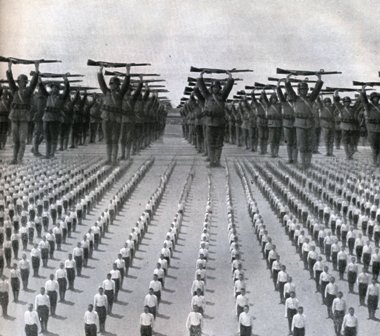 CHINA'S VAST MANPOWER
|
THEY VISIT INDIA
The Chinese Expeditionary Forces in India are noted for their high morale and excellent conduct in making their
hazardous and difficult way from Burma to India. On the soil of this friendly neighbour Chinese soldiers receive
high technical training under expert military instructors. They devote special attention to the study of military
operations "so that they will be enabled in the near future to play worthily their part in the stupendous task of
pushing the 'island dwarfs' into the sea, defeat Nazism and win the final, great and glorious victory."
|
 Chinese troops arriving somewhere in India for training
|
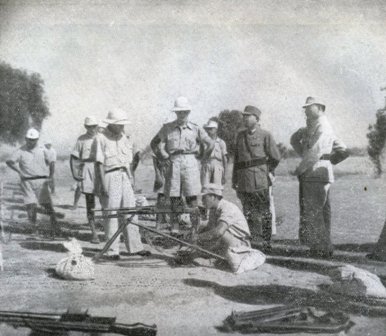 General Lo Cho-ying, former Commander-In-Chief of Chinese Expeditionary Forces stationed in India, watching
how a Bren gun works.
General Lo Cho-ying, former Commander-In-Chief of Chinese Expeditionary Forces stationed in India, watching
how a Bren gun works.
|
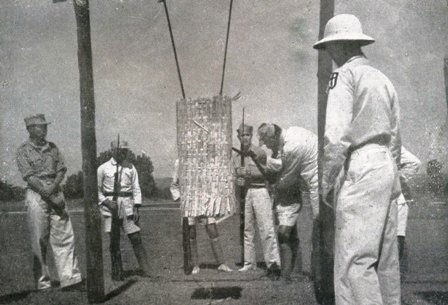 Chinese and Allied soldiers in bayonet practice
|
|
 General Lo Cho-ying, representing the Chinese Government, awarding decorations to American and British officers.
|
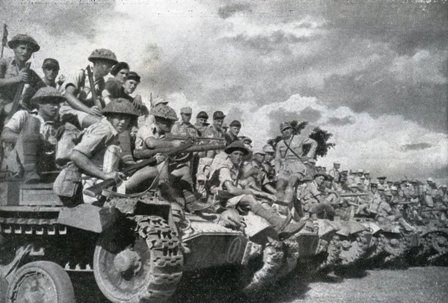 Chinese officers and men with their allies in India
|
|
 A Chinese learns how to handle a shell
|
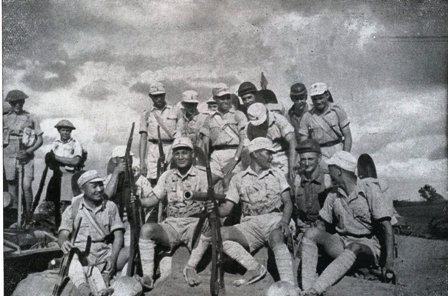 Chinese and British troops pose for group picture
|
|
Chinese soldiers are skilful hand grenade throwers and they always look cheerful
|
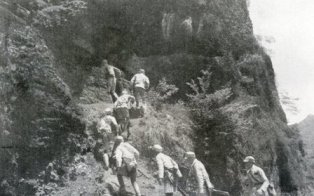 On the enemy's trail along the Yangtze River front
|
|
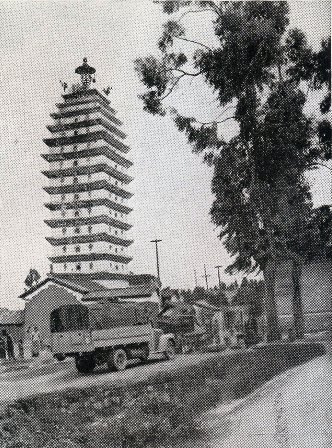 Trucks parked in front of a typical Chinese pagoda on the Burma Road
|
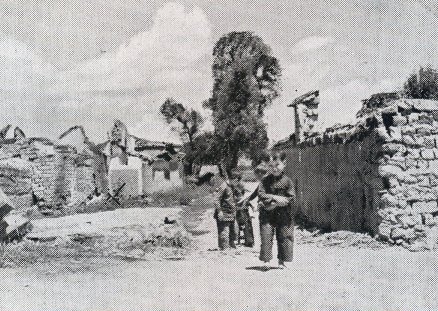 Orphans along the Burma Road
|
|
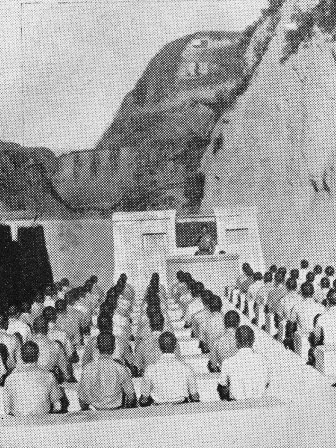 An open air lecture for soldiers on the North China front
|
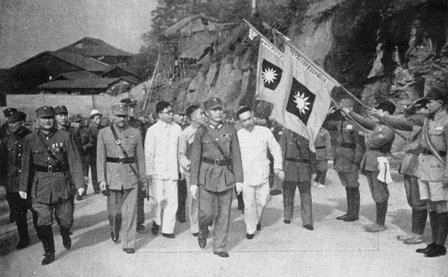 General Ho Ying-chin, Minister of War, reviewing a Chungking parade.
|
|
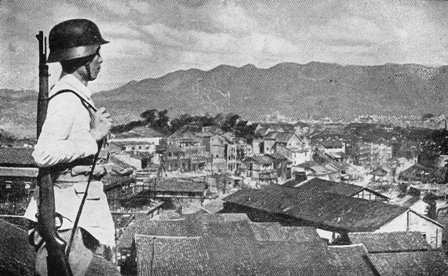 The watch over Chungking
|
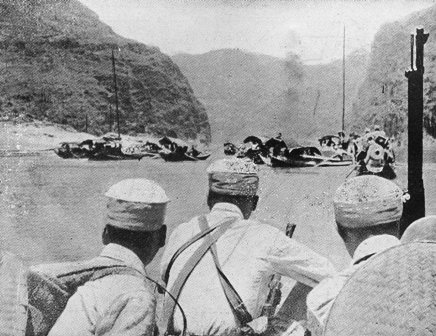 Without amphibious tanks Chinese troops resort to sampans in meeting their enemy
|
|
 A Chinese machine-gunner
|
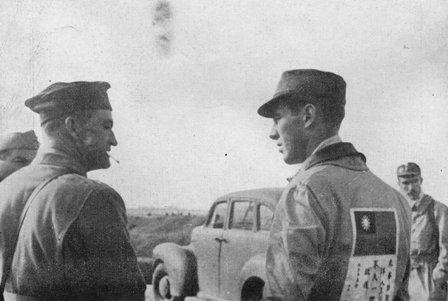 Major General Claire L. Chennault, commander of the 14th USAAF, chatting with an American pilot. Note Chinese
identification badge on airman's back.
Major General Claire L. Chennault, commander of the 14th USAAF, chatting with an American pilot. Note Chinese
identification badge on airman's back.
|
|
 Though lacking in heavy armaments, China makes her own shells in interior regions free from Japanese air menace.
|
 An underground arsenal immune from enemy bombs
|
|
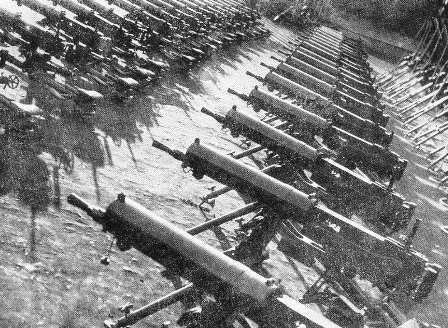 Guns and trench mortars made somewhere in China
|
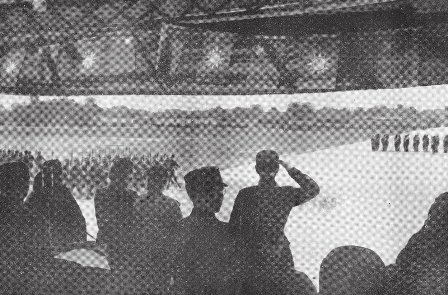 Generalissimo Chiang Kai-shek reviewing China's New Army
|
|
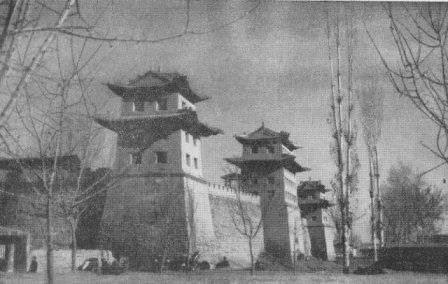
Towers of strength. Typical landmarks in China's northwest.
|
CHINA'S VAST HINTERLAND
China's Northwest - the great and wealthy provinces in the hinterland, comparable to the wild west of America in
pioneer days - has captured the imagination of the enterprising Chinese and stout souls in the world. Wendell Wilkie,
who arrived in China through the Northwest, observed, "I would be prepared to make a substantial bet that the
confident, aggressive, determined spirit I have seen in Sinkiang, and in Kansu, and in Szechwan, and which the
outside world knows about chiefly through the personality of your Generalissimo, is not likely to be stopped by
floods, by earthquakes, or by Japanese."
|
 The Northwesterners are by tradition good Horsemen and Cavalrymen
|
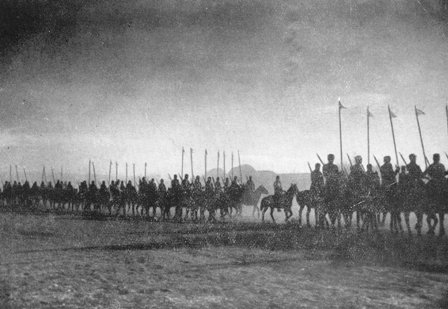 On the ramparts of the Northwest modern trained troops in their duties
|
|
 height=250>
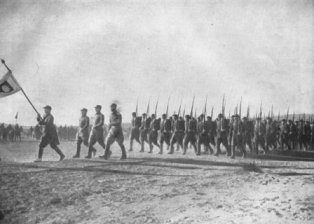
A new Sinkiang Army height=250>
A new Sinkiang Army
|
 height=250>
In a Chinese lamasery height=250>
In a Chinese lamasery
|
 height=250>
Militiamen with spears and rifles height=250>
Militiamen with spears and rifles
|
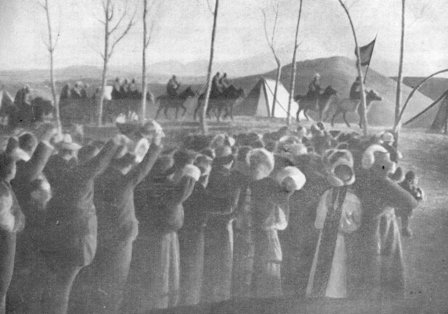 Tibetans sending off soldiers to the front to lick the "Dwarf Islanders"
|
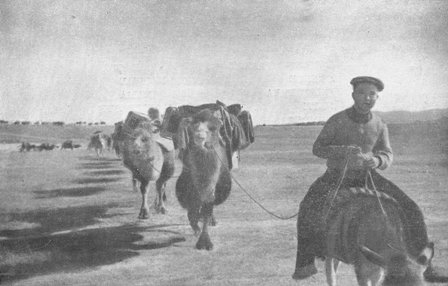 With the loss of the Burma Road, the Northwestern Highway leading to Soviet Russia has become the only channel
through which bulky war materials may still be brought into China. Picture shows a camel caravan transporting goods,
especially petrol, into China.
With the loss of the Burma Road, the Northwestern Highway leading to Soviet Russia has become the only channel
through which bulky war materials may still be brought into China. Picture shows a camel caravan transporting goods,
especially petrol, into China.
|
|
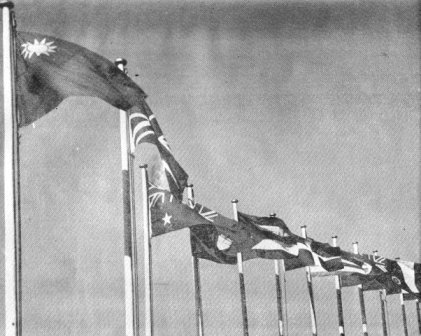 "The flags of the United Nations are the flags of freedoms. By the abrogation of unequal treaties
China has attained
a status of freedom and equality with the world powers."
|
THE UNITED NATIONS
| AUSTRALIA | FIGHTING FRANCE | NICARAGUA |
| BELGIUM | GREECE | NORWAY |
| BOLIVIA | GUATEMALA | PANAMA |
| BRAZIL | HAITI | PHILIPPINES |
| CANADA | HONDURAS | POLAND |
| CHINA | INDIA | SALVADOR |
| COSTA RICA | IRAQ | SOUTH AFRICA |
| CUBA | LUXEMBOURG | UNITED KINGDOM |
| CZECHOSLOVAKIA | MEXICO | U.S.A. |
| DOMINICAN REPUBLIC | NETHERLANDS | U.S.S.R. |
| ETHIOPIA | NEW ZEALAND | YUGOSLAVIA |
|
"By their actions our allies have declared their basic war aim -
to sustain the rule of human decency and human rights - and proved their high ideals and lofty purposes." -
Generalissimo Chiang Kai-shek
 Dr. T. V. Soong, Minister of Foreign Affairs, signing new treaties by which Great Britain and the United States
relinquished their special rights in China.
Dr. T. V. Soong, Minister of Foreign Affairs, signing new treaties by which Great Britain and the United States
relinquished their special rights in China.
|
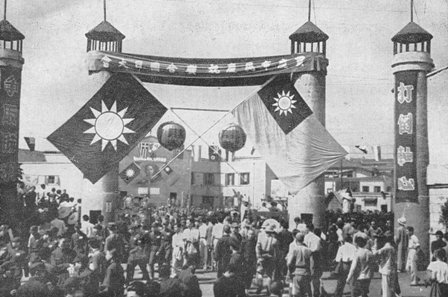 United Nations Day in Chungking
Poster on right column says: "Down with the Axis"
|
 A Chinese unit at United Nations Day parade in New Delhi
|
|
 Generalissimo and Madame Chiang receiving foreign diplomatic representatives in Chungking
|
|
|
Foreign friends of China have come to Chungking on official or friendly missions. "Is it not delightful to have friends
coming from distant lands?" Closer understanding and co-operation between the Allies will lead to the winning of the war
and to the winning of the peace after the war. Generalissimo Chiang Kai-shek says: "This comradeship-in-arms cannot
but spur us on to greater efforts and strengthen our resolve to prosecute this war to its successful conclusion. And
when victory is won, the sincere friendship and mutual understanding, fostered by this comradeship-in-arms, will greatly
aid us in our common task of shaping a new world based on justice and freedom."
|
 Generalissimo and Madame Chiang Kai-shek receiving the Burmese Goodwill Mission
|
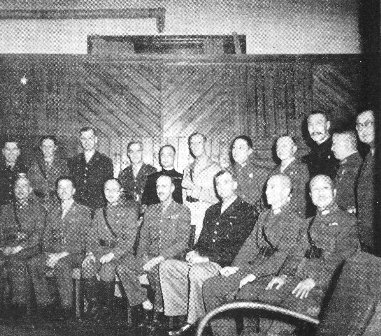 General Alexander with General Ho Ying-chin, Minister of War, Chungking.
|
|
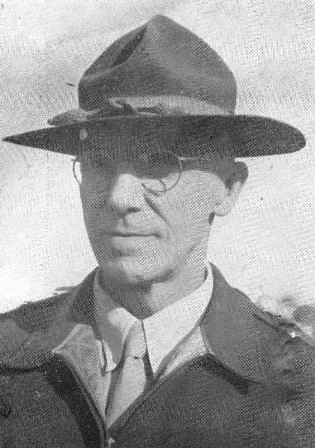 Lt. Gen. Joseph W. Stilwell
Commander of the U.S. Army Forces
in China, Burma and India
|
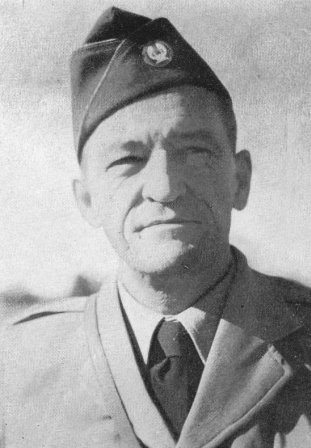 Maj. Gen. Claire L. Chennault
Commander of the 14th USAAF
|
|
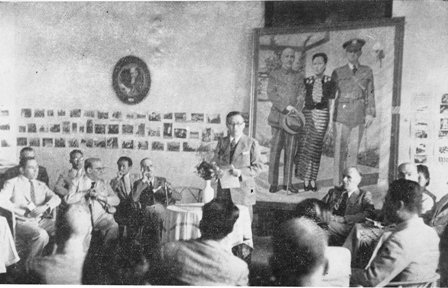 United Nations artists' exhibit
|
 height=320>
Dr. Lauchlin Currie, personal representative of President Roosevelt, in a sedan chair in Chungking. height=320>
Dr. Lauchlin Currie, personal representative of President Roosevelt, in a sedan chair in Chungking.
|
|
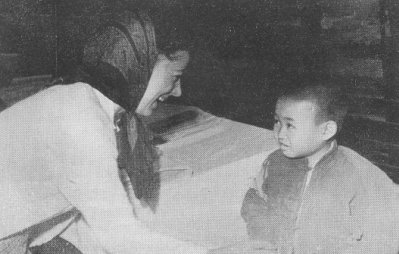 height=320>
Miss Anna Lee Whitmore having a chat with a war orphan height=320>
Miss Anna Lee Whitmore having a chat with a war orphan
|
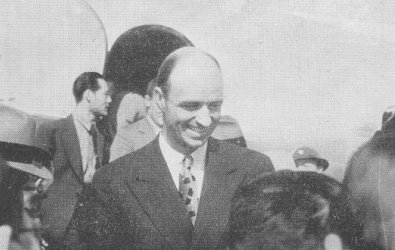 height=320>
James Roosevelt stopped at Chungking for a short visit on way to Cairo height=320>
James Roosevelt stopped at Chungking for a short visit on way to Cairo
|
|
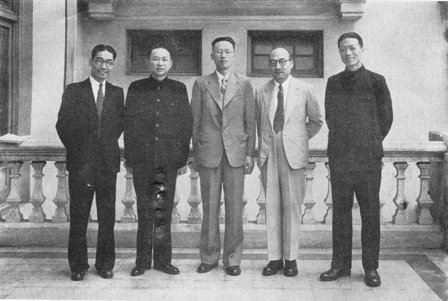 Members of Chinese Educational and Cultural Mission to India, 1943. Left to right: Prof. Wu Wen-tsao,
Dr. Wu Chun-sheng, Vice Minister Y. H. Ku, Prof. Shen Tsung-han and Mr. Joseph Ku.
Members of Chinese Educational and Cultural Mission to India, 1943. Left to right: Prof. Wu Wen-tsao,
Dr. Wu Chun-sheng, Vice Minister Y. H. Ku, Prof. Shen Tsung-han and Mr. Joseph Ku.
|
 Mr. Owen Lattimore, Political Adviser to the Generalissimo.
|
 Dr. H. H. Kung, Minister of Finance and Vice President of the Executive Yuan, photographed with Tagore's
Picture presented by the Sino-Indian Cultural Association in India.
Dr. H. H. Kung, Minister of Finance and Vice President of the Executive Yuan, photographed with Tagore's
Picture presented by the Sino-Indian Cultural Association in India.
|
|
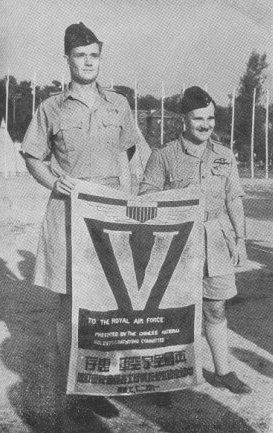 A banner presented to the R.A.F. in China
|
 American correspondents interviewing Dr. Chang Tao-fan, former Minister of Information.
|
|
 Mr. and Mrs. Henry Luce of Time, Life and Fortune honored by Madame Chiang.
|
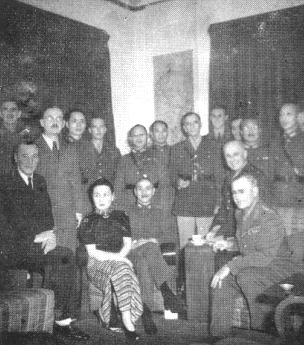 Generalissimo and Madame Chiang welcoming General Sir Archibald Wavell
|
|

Wendell Wilkie arriving at Tihwa, capital of Sinkiang Province.
|
HE WAS "ALMOST KILLED BY CHINESE KINDNESS"
Mr. Wendell Wilkie came to China as President Roosevelt's personal repreasentative. To him China extended a most
hearty welcome. At a reception Generalissimo Chiang Kai-shek said: "His present visit has moved us to redouble
our efforts in order to fulfill worthily our respinsibilities as a member of the United Nations and to come up to
the expectations of our allies and our good friends, among them our guest of honour Mr. Willkie . . . This auspicious
occasion is a token of the solidarity among the United Nations, of our determination to co-operate to the fullest
extent, to fight on until we obtain ultimate victory and create a new era in the future world order."
|
 Generalissimo Chiang Kai-shek welcoming Mr. Wendell Willkie at Chungking
|
 Wendell Willkie with Generalissimo and Madame Chiang at their official residence. On the left U.S.
Ambassador Clarence E. Gauss.
Wendell Willkie with Generalissimo and Madame Chiang at their official residence. On the left U.S.
Ambassador Clarence E. Gauss.
|
|
 A Chinese officer explaining Chinese strategy to Willkie with the help of a miniature battlefield
|
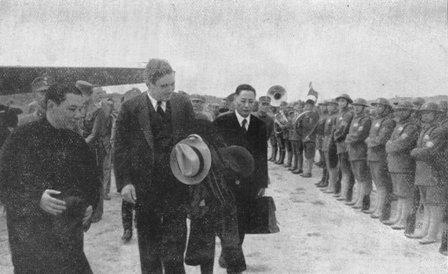 Gen. Chang Chun, Chairman of Szechwan Provincial Government, Mr. Wendell Willkie and Vice Minister Hollington
K. Tong at Chengtu airfield.
Gen. Chang Chun, Chairman of Szechwan Provincial Government, Mr. Wendell Willkie and Vice Minister Hollington
K. Tong at Chengtu airfield.
|
|
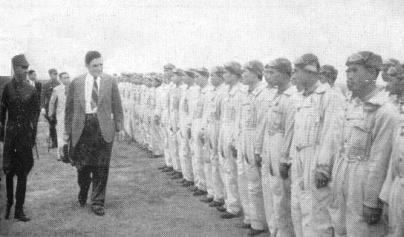 Willkie inspecting Chinese air cadets
|
 Willkie addressing students of five universities in Chengtu
|
|
 Willkie watching juvenile air cadets at play
|
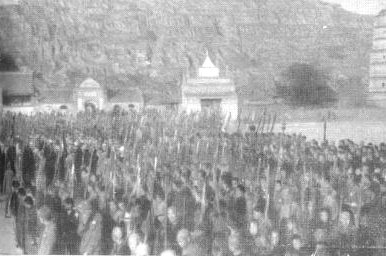 Northwestern Militiamen joining in nationwide welcome to Wendell Willkie
|
|
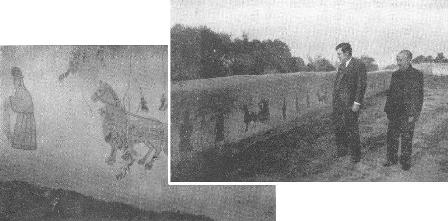
Willkie looks at mural painting with Chairman of Kansu Province. The painting shows the Chinese sage, Confucious,
travelling from state to state in a carriage. Willkie's mission is likened to that of Confucious centuries ago.
|
WHAT WENDELL WILLKIE SAYS:
"I am here to find out some facts. During the three days I have been in China I have fallen so much in love with the
Chinese people that it is going to be difficult to carry out my fact-finding mission with the critical approach. I
find sunshine everywhere I go."
"China's Northwest is a smelting pot of the old and the new. Despite my passing journey I have gathered the impression
that new enterprises in this region such as water conservancy, power supply, forestry, animal husbandry are fast
developing."
"We must win the war and when the war is over, the economic industrial and trade relations between all the peoples should
be adjusted in such a way that every single man will secure his freedom."
"People of China - I have been in Chungking now for five days. I have met your President. I have had the very
stimulating experience of long discussion with your Generalissimo. I have been in conference with your Ministers.
I have visited your factories, your arsenals, your farms and your schools. I have been much impressed by all of
those things. I have been espacially honored to receive the confidence of your great Generalissimo in discussions.
But the thing above all else that has touched me since I have been in this country has been the overwhelming
kindness and the response of the ordinary person that I have met on the street, in the factories and as I drove
along the highways."
"We believe this war must mean an end to the empire of nations over other nations. No foot of Chinese soil, for
example, should be or can be ruled from now on except by the people who live in it."
|
|
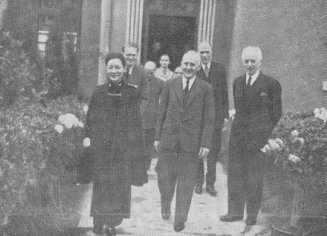
Madame Chiang photographed with British Parliamentary Mission
|
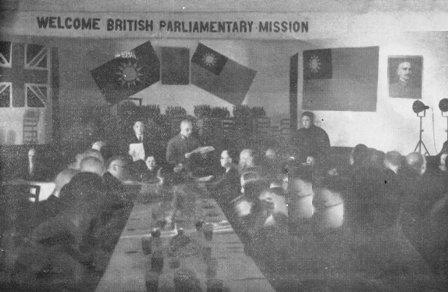
The visit of the British Parliamentary Mission to China (composed of Lord Ailwyn and Lord Tevoit of the House of Lords
and Mr. J. J. Lawson and Captain H. J. Scrymgeour-Wedderburn of the House of Commons) was a unique affair. It was
the first time that the British Parliament, the oldest representative assembly in the world, sent an offical mission
abroad. "Now that our two countries and the other United Nations are intimately bound together in a common cause and
a common destiny, it behooves all of us to co-operate to the fullest extent - and I know we are all equally resolved
to do it - not only in the prosecution of the war, but also in the building up of a saner and happier world." -
Generalissimo Chiang Kai-shek in his speech of welcome on November 11, 1942.
"We do not wish to make a negotiated peace but will pursue the war until Japan unconditionally surrenders. We believe
that the war criminals cannot be punished until the enemy territory is occupied. I think that public opinion in
Britain makes no distinction between Germany and Japan. It is not only in favor of defeating both equally but defeating
them in such a way that there will be no basis for negotiations." - Captain H. J. Scrymgeour-Wedderburn.
|
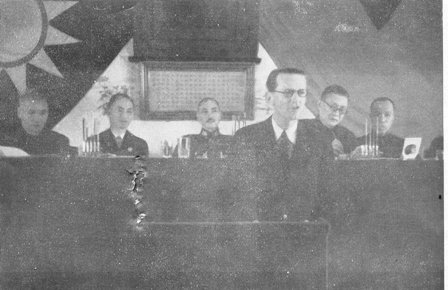 The British Parliamentary representatives spoke at the 10th Plenary session of the Central Executive Committee of
the Kuomintang
The British Parliamentary representatives spoke at the 10th Plenary session of the Central Executive Committee of
the Kuomintang
|
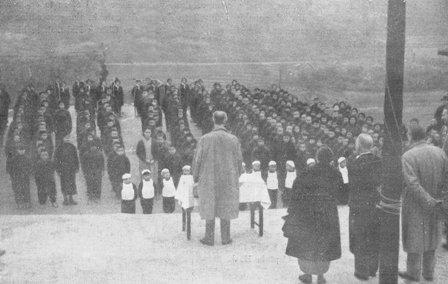 The Parliamentarians speaking to warphans on their visit to a warphange
|
|
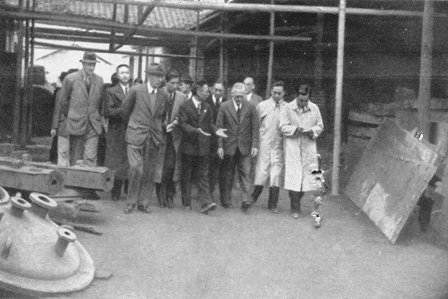 British Parliamentary Mission going through a Chinese factory
|
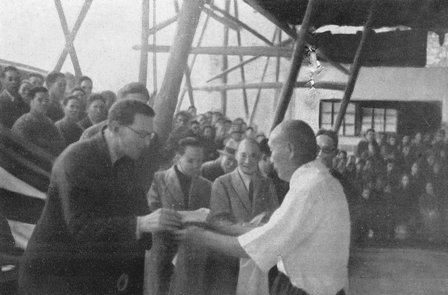 Chinese labor representatives presenting a banner to the Parliamentary Mission
|
|
United Nations Flag Day in Chungking, 1943
|
Adapted from the original book published by the
Chinese Ministry of Information in Chungking
December 1, 1943
TOP OF PAGE
ABOUT THIS PAGE
CLOSE THIS WINDOW
MORE FROM THE CBI THEATER
Shared by Hal Baker
Copyright © 2009 Carl W. Weidenburner
|

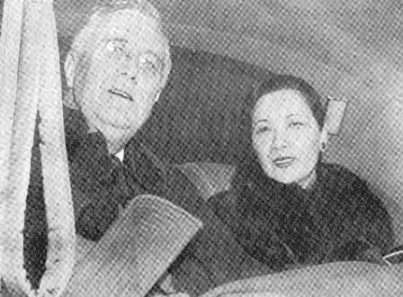 President Franklin D. Roosevelt welcoming Madame Chiang Kai-shek outside
Pennsylvania Station, Washington, D.C.,
on February 17, 1943
President Franklin D. Roosevelt welcoming Madame Chiang Kai-shek outside
Pennsylvania Station, Washington, D.C.,
on February 17, 1943
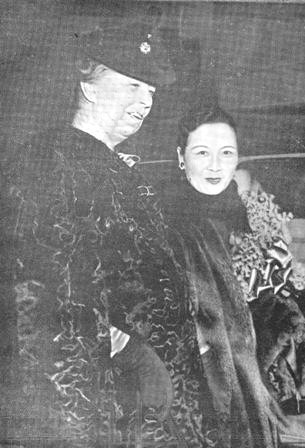 Mrs. Franklin D. Roosevelt, First Lady of the United States, greeting Madame Chiang Kai-shek in Washington, D.C.
on February 17, 1943
Mrs. Franklin D. Roosevelt, First Lady of the United States, greeting Madame Chiang Kai-shek in Washington, D.C.
on February 17, 1943
 height=300>
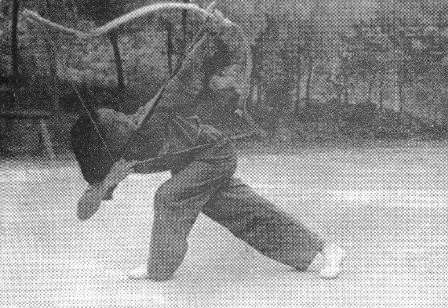
A Chinese girl practicing archery.
height=300>
A Chinese girl practicing archery.
 height=300>
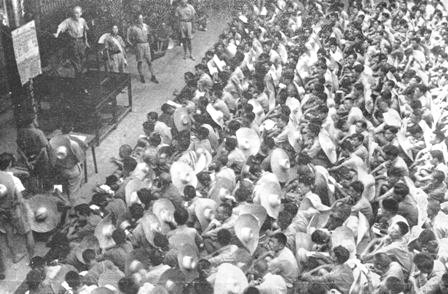
Hundreds of Chinese young men and women attending an annual rally held in the open air in a temple court.
height=300>
Hundreds of Chinese young men and women attending an annual rally held in the open air in a temple court.
 Miss Free China as seen in Chungking.
 A well-developed, muscular young man doing gymnastics.
 China's new womanhood is linked with the hoe, the gun and the martial spirit of a nation dedicated to the
anti-aggression war for the last six years.
China's new womanhood is linked with the hoe, the gun and the martial spirit of a nation dedicated to the
anti-aggression war for the last six years.